
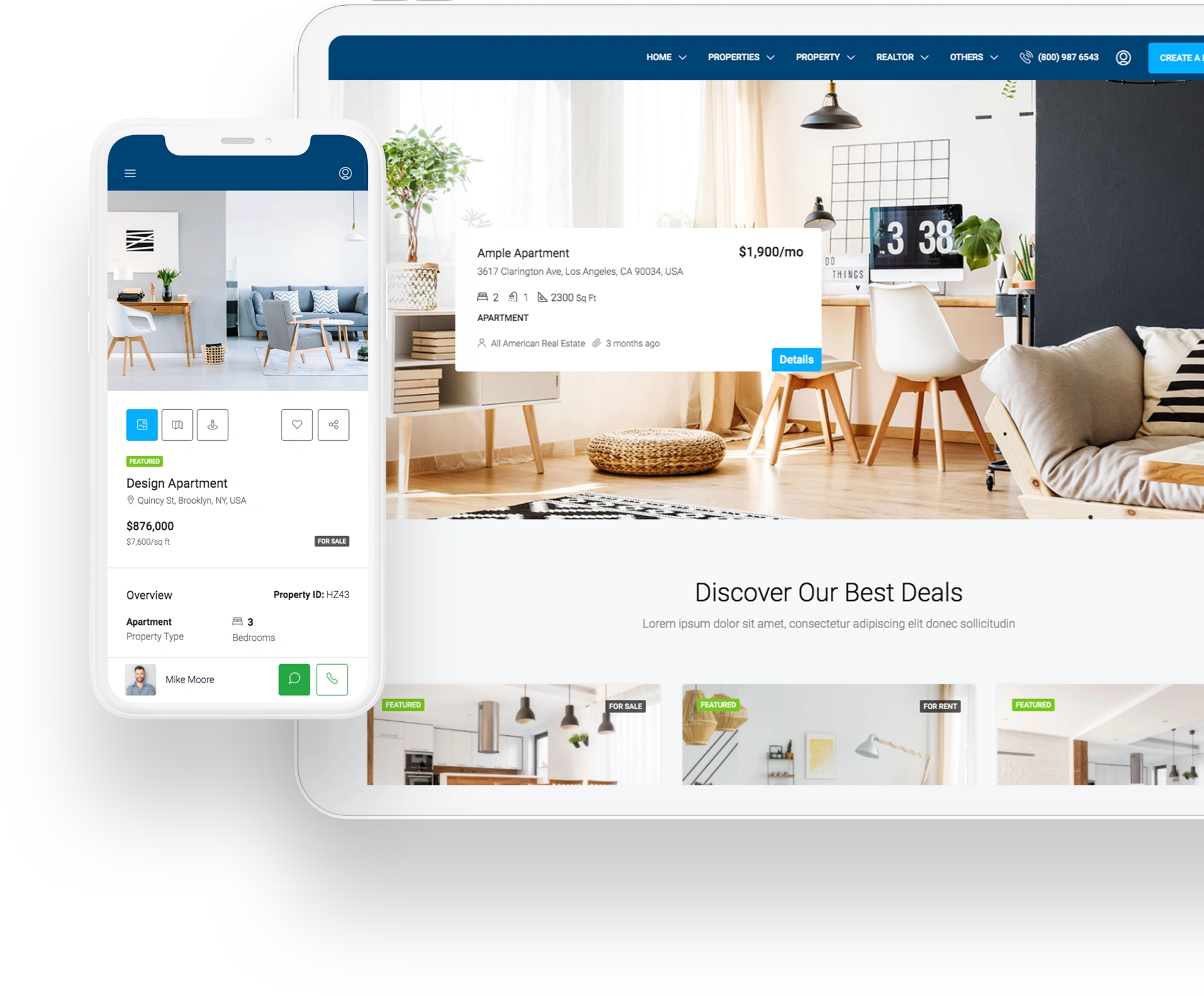
Top 10 Real Estate Agent Website Templates
Think of your website as your digital storefront. Before a client ever shakes your hand, they’ve already judged your credibility online. Research shows professional layouts build instant trust. Weighing custom design vs pre-made themes is like comparing building from scratch to buying a model home. With real estate agent website templates, the structure is built—you simply add the decor to launch quickly and affordably.
The Three Must-Have Features for Every Agent Website
A successful website functions as a 24/7 digital assistant. To capture clients without touching code, your chosen template must include this checklist of essential technical features:
- Data Syncing: If you are wondering how to sync MLS data, reliable IDX integration for property search is the answer. This IDX (Internet Data Exchange) is the digital bridge connecting your site to local homes for sale. Do not stress over complex IDX vs VOW data feeds; simply ensure your template supports live local listings.
- High-converting lead capture forms: Place these directly beside property photos so visitors can effortlessly request a showing while their interest is highest.
- Mobile-friendly listing layouts: This responsive design automatically reshapes your website to look perfect, whether a client is browsing on a giant desktop or a tiny smartphone screen.
Equipping your template with these necessities ensures visitors stay engaged with your properties rather than bouncing over to Zillow.
WordPress vs. Squarespace: Picking the Right Tool for Your Business
Evaluating the best website builders for Realtors usually comes down to WordPress vs Squarespace for real estate. Squarespace provides a simple, low-maintenance package where everything is built-in. Conversely, WordPress is a CMS (Content Management System)—a flexible engine that organizes your web pages and offers limitless customization, but requires more frequent updates. Both handle the essential features for agent sites beautifully, so your decision rests on whether you prefer straightforward convenience or total design control.
Your chosen platform must also connect effortlessly to your CRM (Customer Relationship Manager), the digital database where you track client leads and phone calls. Integrating CRM with realtor websites ensures that when a prospect requests a showing online, their contact information automatically drops directly into your system. This automation eliminates manual typing so you can focus on selling.
10 Template Styles That Turn Visitors Into Local Clients
Deliver a flawless user experience for home buyers by matching your brand to one of 10 template styles: The Luxury Showcaser, The Neighborhood Expert, The Modern Minimalist (featuring modern property showcase styles), The Relocation Pro, The Urban Guide, The Suburban Matchmaker, The Condo Specialist, The First-Time Buyer, The Investment Guru, and The Historic Expert. Every style requires optimizing Realtor bio pages to build a personal connection before a client ever calls.
Building trust happens locally. Creating neighborhood guide landing pages—standalone web pages designed to highlight a single community—proves your expertise and boosts local SEO for individual agents. Local SEO simply means helping your website rank higher on Google when buyers search for your specific town.
Your Weekend Launch Plan: From Template to Live Site
You no longer need technical skills to open your digital storefront. Over a single weekend, you can execute a simple three-step launch strategy: choose from modern real estate agent website templates, swap in your personalized text, and hit publish. A functional, well-designed site allows you to easily capture incoming leads and focus entirely on growing your real estate business.
